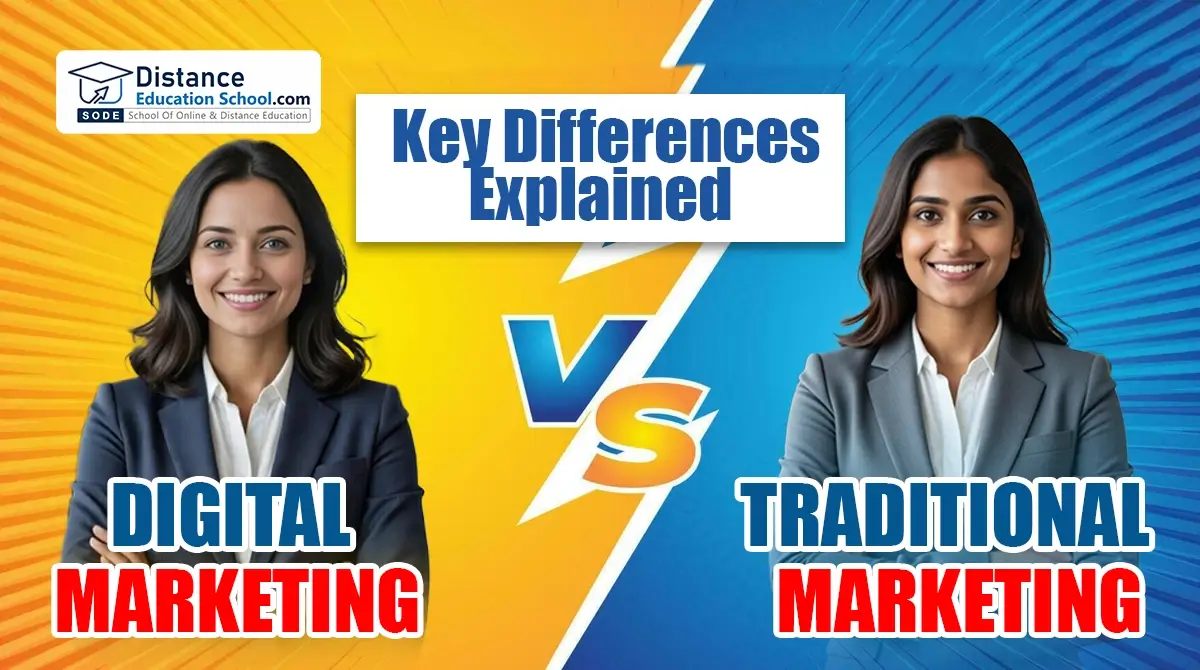
Digital Marketing vs Traditional Marketing: Key Differences Explained
Are you looking forward to setting foot in the Digital or Traditional marketing space, but are confused about which to choose? Digital marketing and Traditional Marketing are two distinct marketing methods that enable business owners and marketers to reach a wider audience. With marketing, different businesses find their potential customers and promote their products and brands. In this rapidly changing world of technology and consumer behaviour, both digital and traditional marketing offer different ways to reach a larger audience. In this blog, we will discuss digital and traditional marketing, highlighting their key differences, advantages, disadvantages, and methods. It will help you understand which marketing method works best for your business.
What is Digital Marketing and Traditional Marketing?
Digital marketing and traditional marketing are two distinct methods businesses use to reach broad potential audiences for various brands, products, and services. Digital marketing focuses on reaching a larger audience through online platforms and digital technologies, including websites, social media, email, SEO, apps, and mobile applications. On the other hand, traditional marketing involves using conventional channels such as television, newspapers, magazines, flyers, billboards, and radio. This method usually has a wider reach to a larger audience. Both digital and traditional marketing play an important role in helping businesses grow, build brand awareness, and attract new customers.
Types of Digital Marketing & Traditional Marketing Channels
Marketing channels are the media a business uses to engage and reach out to audiences. Understanding the different channels available in both Digital and Traditional Marketing will help businesses choose the most effective marketing model for them, one that fits just right and reaches the right audience and a wider one.
Digital Marketing Channels
Social Media Marketing: Platforms like Facebook, Instagram, X, and LinkedIn enable businesses to reach customers directly and build brand awareness.
Search Engine Optimization (SEO): Optimizing a website and content to appear higher in search engine results and attract more traffic.
Search Engine Marketing (SEM): Paid Ads on Google boost your visibility and help you reach a bigger audience.
Email Marketing: Sending personalized and professional emails to your potential and existing customers to promote your brand.
Content Marketing: Creating content like Blogs, Videos, E-books, and infographics to reach a wider audience.
Traditional Marketing Channels
Print Media: Print media usually refers to readable material, such as newspapers, magazines, brochures, and flyers.
Broadcast Media: Media such as television and radio ads are considered broad media, where people consume audiovisual content.
Events and Sponsorship: Big brands organize events and sponsor shows to promote their products and services and collaborate with artists to raise brand awareness.
Outdoor Advertising: Billboards, posters, banners, and ads displayed in high-traffic areas help businesses promote their brands and products.
Difference Between Digital Marketing and Traditional Marketing
The major difference between Digital Marketing and Traditional Marketing is the tools and platforms used to reach audiences, as well as the methods by which they are used. Digital marketing uses networks such as social media platforms (Facebook, Instagram, X, etc.), websites, Google Ads, and search engines to promote products and services. It allows businesses to target actively seeking audiences who are interested in specific brands and services. In contrast, traditional marketing mainly uses offline channels such as television, radio, newspapers, and magazines. The promotion through traditional marketing targets broader audiences and offers services and products that generally appeal to all sectors of the public.
Basis of Comparison
Digital Marketing
Traditional Marketing
Platforms
Websites, Social Media, and email
TV, Radio, Newspapers
Target Audience
Direct Contact and personalized
Broad and general audience
Cost
Usually cost-effective and affordable
Generally more expensive
Interaction
Interactive Two-way communication with customers
One-way communication
Performance Measurement
Mostly accurate and easy to track results
Difficult to measure results accurately
Reach
Global reach
Mostly local or regional
Flexibility
Highly Flexible and modifiable
Difficult to change once launched, published, or telecast
Which one is Better Digital Marketing or Traditional Marketing?
In the world of aggressive marketing, both Digital Marketing and Traditional Marketing hold their weight. Both Marketing strategies serve different purposes and target different audiences. A better marketing strategy, whether Digital or Traditional, depends on the type of services and products a business sells. Understanding the strengths of both marketing models can help businesses select the right approach and grow exponentially.
Business Objectives: Digital Marketing is generally considered best for online businesses, as their entire operations take place online and target online consumers. Traditional marketing is generally for offline brands with strong offline brand value.
Target Audience: Digital marketing typically involves reaching younger audiences, as they are more tech-savvy and constantly active on social media. Traditional marketing is better suited to older demographics that still engage with older media such as television and print.
Cost Effectiveness: Digital marketing is a more affordable and safer option for businesses looking to save on their marketing budget. On the other hand, traditional marketing is generally more costly and targets a larger audience.
Reach: Digital marketing provides global reach and attracts diverse age groups, whereas traditional marketing mainly targets local audiences within their respective demographics.
Engagement and Interaction: With Digital marketing, businesses can achieve two-way communication and interact directly to gather feedback, whereas traditional marketing typically involves one-way communication.
Performance Measurement: Digital marketing allows businesses to track and analyse data and drive results in real time, whereas it is hard to measure exact results with traditional marketing.
To grow and reach a large audience, businesses should approach a balanced combination of digital and traditional marketing tools to gain maximum reach, credibility, and long-term success.
Conclusion
The Digital Marketing vs Traditional Marketing are adaptations of marketing strategies for different business models. Both of these marketing approaches help grow businesses and connect with a wider audience. The real difference between traditional and digital marketing lies in the medium, approach, cost, interaction, and measurement of results. With digital marketing, businesses reach an active, interactive audience, while with traditional marketing, they reach a wider audience. Understanding the differences between the two marketing approaches can help companies choose the one that best suits them. A mix of both marketing approaches can give businesses greater visibility.
Digital marketing uses online channels like Social media, Websites, and email to reach the audience, while traditional marketing focuses more on traditional channels like TV, radio, newspapers, billboards, and print media.
Digital Marketing is interactive, engaging, and cost-effective compared to traditional marketing, which is usually one-way, less engaging, and more costly.
Digital marketing is considered better for its affordable, interactive, and measurable campaigns, while traditional marketing is known for reaching a wider audience and bringing brand visibility.
The biggest advantage of digital marketing is that it enables real-time tracking and online engagement, whereas traditional marketing offers only one-way communication, resulting in slower feedback.
Digital marketing examples are social media ads, Google Ads, email campaigns, and influencer marketing. Traditional Marketing examples are TV commercials, radio ads, newspapers, magazines, and flyers.